
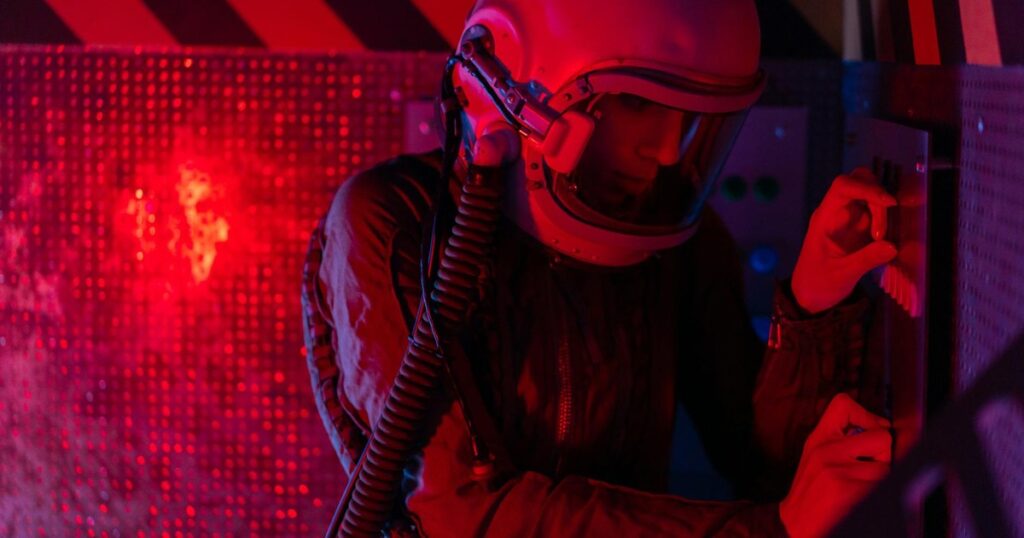
NASA’s Artemis II mission has concluded with a precise splashdown in the Pacific Ocean, bringing four astronauts back to Earth after a groundbreaking journey around the Moon. The Orion spacecraft, named Integrity, touched down off the coast of San Diego, California, at 5:07 p.m. Pacific Time, according to agency officials. All crew members—Commander Reid Wiseman, pilot Victor Glover, and mission specialists Christina Koch and Jeremy Hansen—were reported in “green” condition, indicating they are safe and healthy following what NASA described as a “perfect” landing.
This mission represents NASA’s first crewed flight to lunar orbit in over five decades, with the astronauts spending just over nine days in space, rounded up to ten days for official purposes. During their time aloft, the crew ventured farther from Earth than any humans before, reaching an estimated distance of 252,760 miles from our planet. Their trajectory included a complete orbit of the Moon, allowing them to capture photographs of previously unseen surface regions and observe a total solar eclipse from a unique vantage point.
Among their scientific contributions, the team identified new craters on the lunar surface, with one named in honor of Carroll, the late wife of Commander Reid Wiseman, who passed away from cancer in 2020. This act of commemoration underscores the personal and exploratory dimensions of the mission, blending human emotion with celestial discovery.
In the aftermath of the landing, NASA Administrator Jared Isaacman praised the crew, calling them “ambassadors to the stars” and emphasizing the flawless execution of the mission. “I can’t imagine a better crew. It was a perfect mission,” Isaacman stated, highlighting the significance of this test flight. A commercial astronaut with two private orbital missions to his credit, Isaacman also took to social media platform X to celebrate the achievement, signaling a renewed era of lunar exploration for the United States.
“America is back in the business of sending astronauts to the Moon and bringing them home safely,” Isaacman wrote on X, later extending credit to the entire NASA workforce. He noted that Artemis II served as a critical test mission, being the first crewed flight of the Space Launch System (SLS) and Orion spacecraft, designed to push deeper into the harsh environment of space than ever before. “This was a test mission, the first crewed flight of SLS and Orion, pushing farther into the unforgiving environment of space than ever before, and it carried real risk. They accepted that risk for all we stood to learn and for the exciting missions that follow, as we return to the lunar surface, build a Moon base, and prepare for what comes next,” Isaacman explained, outlining the strategic importance of this endeavor for future infrastructure and exploration goals.
The successful return of the Artemis II crew not only marks a technical triumph but also sets the stage for subsequent missions aimed at establishing a sustained human presence on the Moon. With systems now validated through real-world testing, NASA moves closer to its objectives of lunar surface operations and preparation for deeper space ventures, reinforcing the agency’s role in advancing human exploration beyond Earth’s orbit.