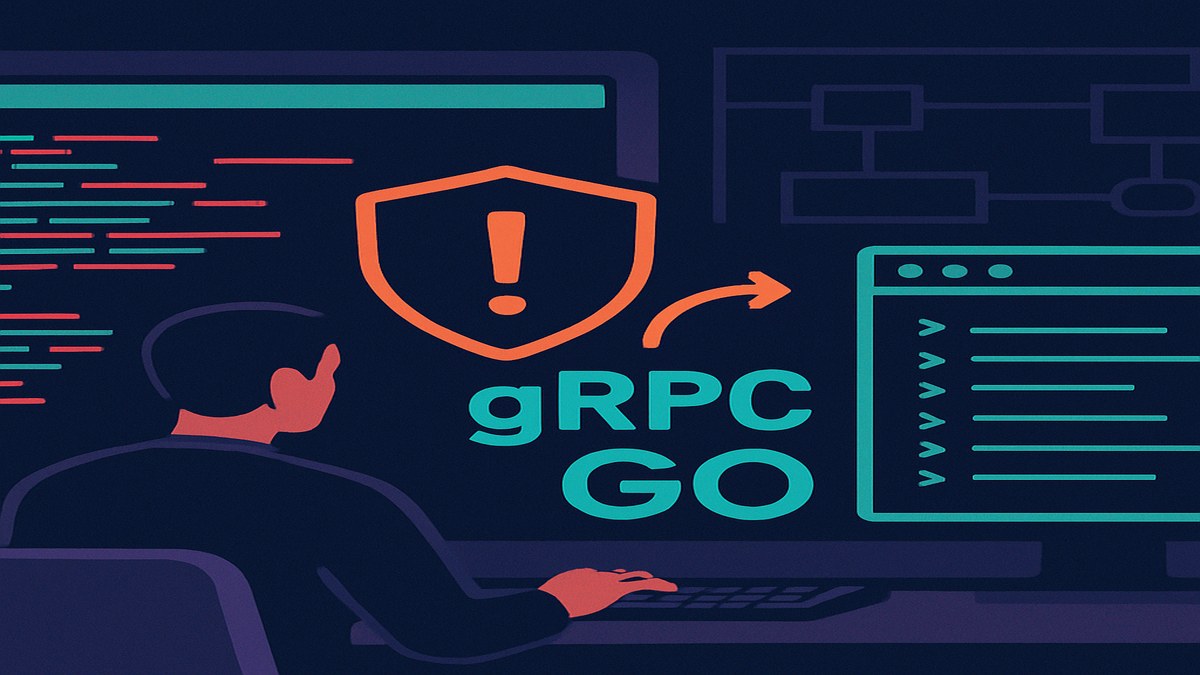
In a significant security development affecting numerous services, the maintainers of gRPC-Go disclosed a critical vulnerability, identified as CVE-2026-33186, this week. The flaw, characterized as a path-confusion vulnerability, enables HTTP/2 requests with non-canonical :path pseudo-headers to bypass authorization interceptors and directly access underlying handlers. This vulnerability was introduced with the release of gRPC-Go version 1.56 in July 2023 and has persisted through the latest versions up to 1.70. With gRPC-Go serving as the primary gRPC implementation for the Go programming language, this issue has far-reaching implications, potentially affecting major platforms like Google Cloud and CockroachDB. The flaw allows attackers, who are aware of the RPC method names, to bypass authentication and access protected endpoints. This article delves into the details of CVE-2026-33186, its impact on the ecosystem, and the urgent steps developers need to take to safeguard their applications.
Context
The gRPC-Go library is a cornerstone of modern cloud-native architecture, serving as a robust framework for developing high-performance, language-agnostic RPC services. Widely adopted across the industry, gRPC facilitates seamless communication between distributed services, offering support for multiple languages. Within the Go ecosystem, gRPC-Go stands as the reference implementation, underpinning critical components of major platforms such as Google’s internal infrastructures, CockroachDB’s distributed SQL database, and Istio’s sidecar proxy implementation. Given its widespread use, any security vulnerability within gRPC-Go reverberates across a multitude of services, making it a critical point of concern for developers and security teams alike.
The path-confusion vulnerability CVE-2026-33186 arises from a discrepancy in how gRPC-Go versions 1.56 through 1.70 handle :path headers. These headers, which specify the RPC call’s target, are subject to literal string comparison by authorization interceptors. Meanwhile, the routing mechanism normalizes these paths for dispatch purposes. This misalignment allows attackers to craft HTTP/2 requests with non-standard paths, such as ‘Package.Method/’ or ‘PACKAGE.method’, that can circumvent authorization checks while still being correctly routed to the intended handler. As such, this flaw represents a significant loophole in the authentication logic of gRPC services.
The disclosure of CVE-2026-33186 underscores the importance of maintaining vigilance over third-party dependencies, particularly those extensively embedded in critical services. The issue highlights a fundamental oversight in path handling logic, where a failure to canonicalize paths uniformly across all stages of request processing leads to exploitable behavior. The fix, introduced in gRPC-Go 1.71.1, addresses this by ensuring that paths are canonicalized prior to both routing and interceptor evaluation, thereby aligning the two processes and closing the security gap.
What Happened
This week, gRPC-Go maintainers released a security bulletin detailing CVE-2026-33186, a path-confusion vulnerability affecting versions 1.56 to 1.70. This vulnerability allows unauthorized access through specific HTTP/2 requests that use non-canonical :path pseudo-headers, effectively bypassing authentication interceptors. The flaw was introduced in July 2023 with version 1.56 and persisted undetected until the recent discovery. The vulnerability’s exposure is particularly alarming given gRPC-Go’s role as the reference implementation for gRPC in Go, and its integration into high-profile applications such as Google Cloud services, CockroachDB, and Istio’s proxy framework.
The vulnerability centers around a mismatch between the string comparison method used by authentication interceptors and the path normalization undertaken by the routing mechanism. Attackers can exploit this by crafting requests with subtly altered path names, such as appending slashes or altering case sensitivity, allowing them to bypass security checks while still being routed correctly. This bypass could allow unauthorized access to sensitive endpoints, posing a critical risk to services relying on gRPC-Go for secure communication.
In response, the gRPC-Go team released version 1.71.1, which introduces a crucial fix: paths are now canonicalized both before interceptor checks and during routing, ensuring consistency and preventing bypass attacks. Teams using gRPC-Go are urged to upgrade immediately to mitigate potential threats. Additionally, a one-line patch is available for those unable to update immediately, providing a stopgap solution by enforcing path canonicalization in existing versions. For developers, runtime detection of this exploit can be achieved by examining access logs for :path values that do not match defined method names exactly.
Why It Matters
The disclosure of CVE-2026-33186 has significant implications for the software development industry, particularly for organizations employing gRPC-Go in their architecture. Given the library’s extensive integration in cloud infrastructure and distributed systems, the vulnerability poses a substantial threat to data security and application integrity. The ability to bypass authorization mechanisms could lead to unauthorized data access, service disruption, and potential breaches of sensitive information, affecting user trust and compliance with regulatory frameworks.
For developers and security teams, this incident highlights the critical importance of thorough security audits and continuous monitoring of third-party dependencies. It serves as a stark reminder that even widely-trusted libraries and frameworks can harbor vulnerabilities with far-reaching consequences. Organizations must prioritize regular updates and patches to their software stacks, ensuring that any discovered vulnerabilities are rectified promptly. Furthermore, the incident underscores the need for robust security testing protocols, including automated tools capable of detecting path anomalies and other potential attack vectors in real-time.
The gRPC-Go vulnerability also presents a learning opportunity for the broader community, emphasizing the necessity of meticulous code review and testing practices. As software ecosystems grow increasingly complex, developers must adopt a proactive approach to security, integrating it into the development lifecycle from the outset. By fostering a culture of vigilance and preparedness, the industry can better safeguard against the potential threats posed by vulnerabilities like CVE-2026-33186, ensuring a more secure digital future.
How We Approached This
In crafting this analysis of CVE-2026-33186 and its implications, Code Pulse Weekly consulted a range of authoritative sources, including the official gRPC-Go security bulletin and technical documentation from major platforms affected by the vulnerability. Our editorial team emphasizes rigorous fact-checking and a precise focus on the technical underpinnings of the issue, ensuring our readers receive a well-rounded understanding of the problem and its impact.
Our coverage prioritizes clarity and depth, recognizing that our audience comprises developers and IT professionals seeking actionable insights. We chose to emphasize the vulnerability’s technical details, its real-world implications, and the swift mitigation steps available to affected teams. By focusing on these aspects, we aim to empower our readers with the knowledge necessary to protect their systems and contribute to a safer software ecosystem.
Frequently Asked Questions
What is CVE-2026-33186?
CVE-2026-33186 is a path-confusion vulnerability in the gRPC-Go implementation that allows HTTP/2 requests with non-canonical :path headers to bypass authorization interceptors. This vulnerability affects versions 1.56 through 1.70 of gRPC-Go, enabling attackers to access protected endpoints without credentials by exploiting discrepancies in path normalization.
How can developers protect their applications?
Developers can protect their applications by upgrading to gRPC-Go version 1.71.1, which resolves the vulnerability by ensuring consistent path canonicalization. For immediate mitigation, a one-line patch is available to enforce path normalization in existing versions. Additionally, developers should monitor access logs for anomalous :path values to detect potential exploitation attempts.
Are other gRPC implementations affected?
No, other gRPC implementations such as gRPC-Java and gRPC-C++ are not affected by CVE-2026-33186. These implementations utilize a pb-descriptor lookup for path handling rather than relying on string-matching interceptors, thereby avoiding the path-confusion vulnerability present in gRPC-Go.
As the industry navigates the repercussions of CVE-2026-33186, the importance of maintaining robust security practices is clearer than ever. Developers and organizations must remain vigilant, continuously updating and auditing their systems to safeguard against vulnerabilities. The swift patching of gRPC-Go demonstrates the community’s commitment to security resilience, providing a model for addressing future challenges. By prioritizing security and fostering collaboration, we can build a more secure and trustworthy technological landscape.